Email Us
long-pass-filter
longpass-optical-filter

Longpass Filter

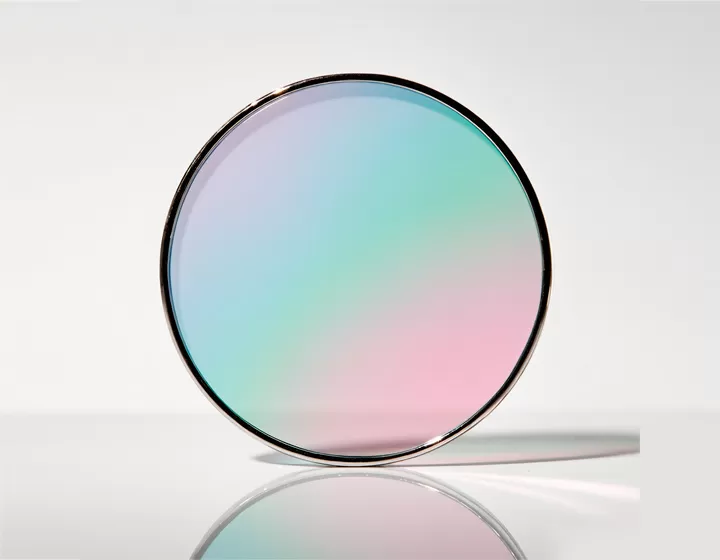
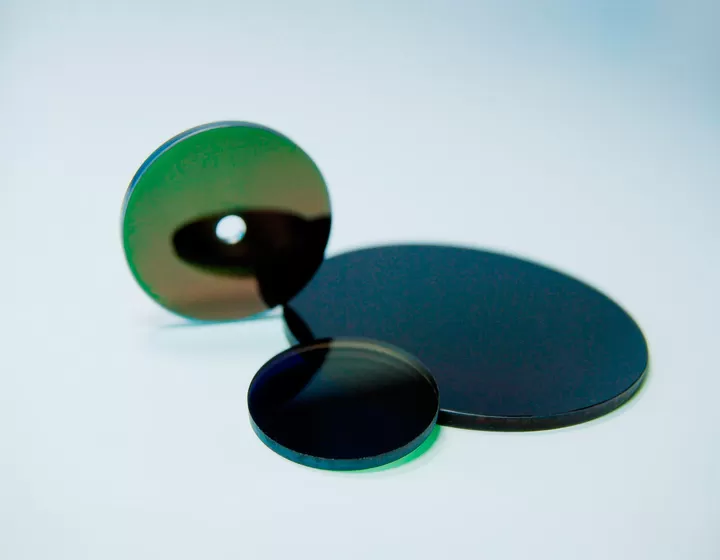
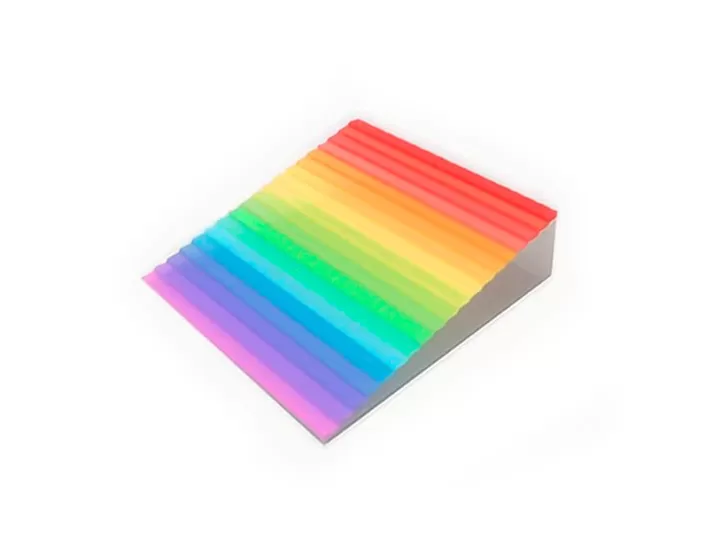
Long wave pass filter is a very common optical filter that allows light longer than a specific wavelength to pass through (transmit), while blocking light shorter than that wavelength (reflect or absorb).

Contact

Features of Longpass Filter

ECOPTIK has the advantages of wide cut-off band width, deep cut-off depth, high conversion steepness and high transmittance. It can be widely used in fluorescence excitation spectrum measurement, Raman spectrum application, spectrum grouping application, and astronomical observation application, etc. It can also be widely used in imaging optical system, machine vision system application, used to eliminate the interference light outside the available band, greatly improve the imaging clarity, as well as the sensitivity of the system.

Features of Longpass Filter

Specification of Longpass Filter


Material

BK7

Transmittance

T>90%

Blocking Depth

OD2-OD4

AOI

0° or 45°

Surface   quality

60/40

Clear aperture

>90%

Part No. blocking Range

(nm) Blocking Depth Transmission Range

(nm) Transmittance in pass band


LPF400 200-375 >OD2 420-1200 Tavg>85%

LPF425 200-405 >OD2 445-1200 Tavg>85%

LPF450 200-430 >OD2 470-1200 Tavg>85%

LPF475 200-455 >OD2 495-1200 Tavg>85%

LPF500 200-480 >OD2 520-1200 Tavg>85%

LPF525 200-550 >OD2 545-1200 Tavg>85%

LPF550 200-530 >OD2 575-1200 Tavg>85%

LPF575 200-550 >OD2 600-1200 Tavg>85%

LPF600 200-570 >OD2 625-1200 Tavg>85%

LPF625 200-595 >OD2 650-1200 Tavg>85%

LPF650 200-620 >OD2 675-1200 Tavg>85%

LPF675 200-645 >OD2 700-1200 Tavg>85%

LPF700 200-670 >OD2 725-1200 Tavg>85%

LPF725 200-695 >OD2 750-1200 Tavg>85%

LPF750 200-720 >OD2 775-1200 Tavg>85%

LPF775 200-745 >OD2 800-1200 Tavg>85%

LPF800 400-770 >OD2 825-1200 Tavg>85%

LPF825 400-795 >OD2 850-1200 Tavg>85%

LPF850 400-820 >OD2 875-1200 Tavg>85%

LPF875 400-845 >OD2 900-1200 Tavg>85%

LPF900 400-870 >OD2 930-1200 Tavg>85%

LPF925 400-895 >OD2 955-1200 Tavg>85%

LPF950 400-910 >OD2 980-1200 Tavg>85%

LPF975 400-935 >OD2 1010-1800 Tavg>85%

LPF1000 400-960 >OD2 1040-1800 Tavg>85%

LPF1025 400-985 >OD2 1070-1800 Tavg>85%

LPF1050 400-1010 >OD2 1110-1800 Tavg>85%

LPF1075 400-1035 >OD2 1130-1800 Tavg>85%

LPF1100 400-1060 >OD2 1160-1800 Tavg>85%


Types of Longpass Filter

1. Interference type (thin film type) long wave pass filter


This is the most high-performance and widely used type.


Working principle: Based on the interference effect of light. Vacuum coating dozens of layers of dielectric films with different refractive indices on glass substrates. By precisely controlling the thickness of each layer of film, short wavelength light is reflected due to destructive interference, while long wavelength light passes smoothly due to constructive interference.


Features:

Excellent performance: The cutoff edge is very steep, the transmittance of the transmission area is high, and the blocking effect is good.

Customizable: The cutoff wavelength and performance can be precisely designed according to the needs.

Good thermal stability.

The cost is relatively high.


2. Absorption type (colored glass) long wave pass filter


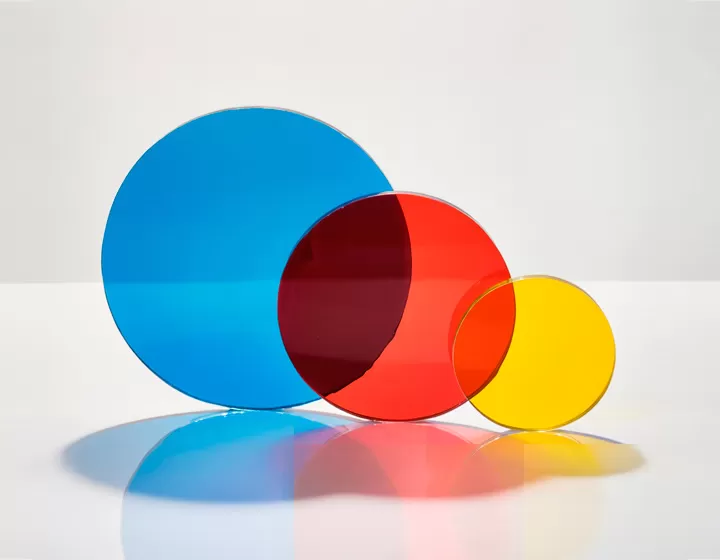
Working principle: Utilizing the optical properties of colored glass with a special formula. The materials in glass absorb short wavelength (high-energy) light while allowing long wavelength (low-energy) light to pass through.


Features:

Low cost.

Performance is average: the cutoff edge is very smooth, and the transition zone is wide.

Commonly used in situations with low requirements or in combination with interference filters to enhance the blocking effect.


How to choose a long wave pass filter?

When making a choice, please consider the following points based on your application:

Cut off wavelength: What wavelength of light do you need to block below? What wavelength of light does it need to pass through?

Cut off steepness: Does your application require very sharp wavelength separation? Is a smooth transition acceptable?

Blocking degree: How strong is the blocking ability required? Measured by optical density (OD), the higher the OD value, the better.

Transmittance: What high transmittance do you need in the illuminated area? The higher the signal, the less signal loss.

Incident angle: Does the light in your optical system illuminate the filter at a larger angle?

Surface quality and durability: Choose the appropriate hard film and products with good environmental stability according to the usage environment.


Pushing the Boundaries of Vision: Custom Plan Apochromatic Objectives by ECOPTIK
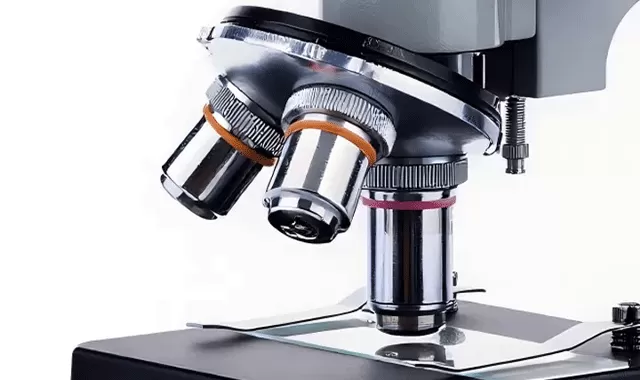
Top-tier scientific research and demanding industrial applications can't afford compromise. When standard optics fall short, you need a partner capable of engineering vision at the microscopic lev...

30

2025.10

Micro Prism Solutions for Advanced Medical Endoscopy by ECOPTIK
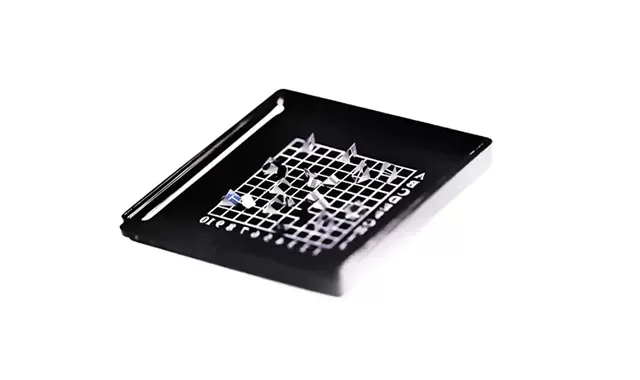
In the delicate world of medical diagnostics, the clarity of a single image can determine a patient's treatment path. As endoscopy becomes more sophisticated, the demand for ultra-precise, miniatu...

30

2025.10

ECOPTIK at Laser World of PHOTONICS 2025
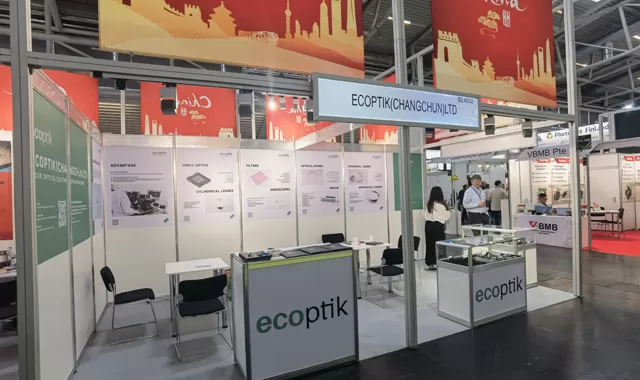
On June 24-27, 2025 local time, the global optoelectronic industry event, the Laser World of PHOTONICS 2025, kicked off at the Messe München. As one of the most influential exhibitions in the industr...

25

2025.06

We use cookies to offer you a better browsing experience, analyze site traffic and personalize content. Part of the tracking is necessary to ensure SEO effectiveness,
By using this site, you agree to our use of cookies. Visit our cookie policy to learn more.
Reject Accept