Email Us
custom-optical-filters

Dichroic Filter

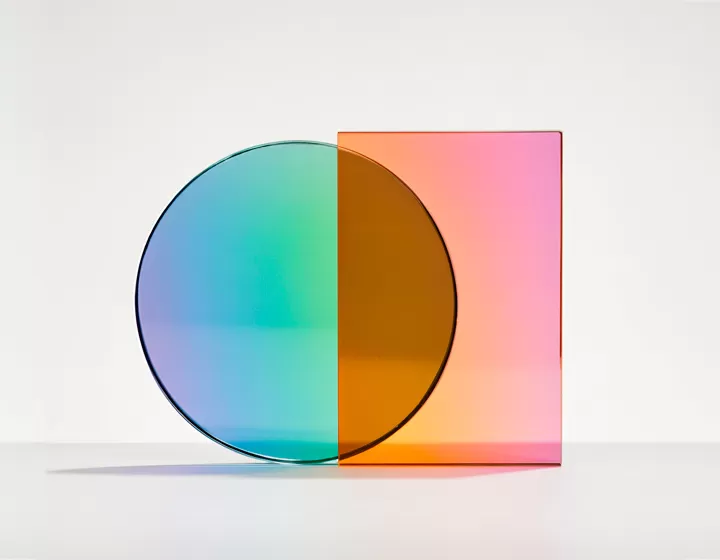
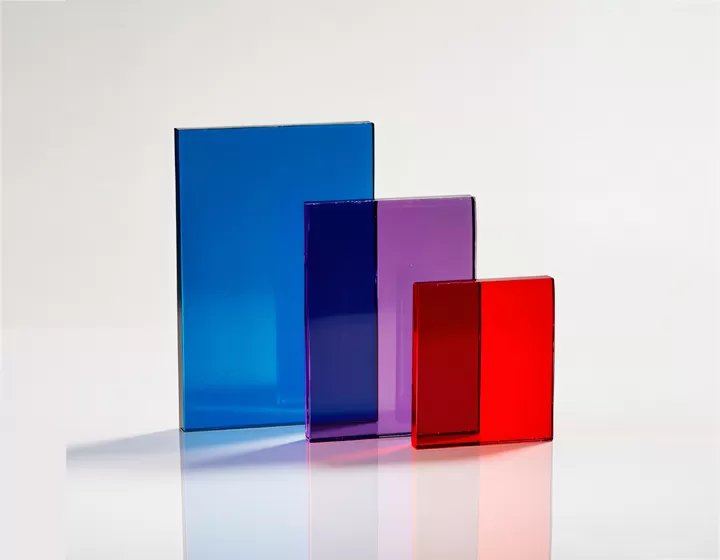
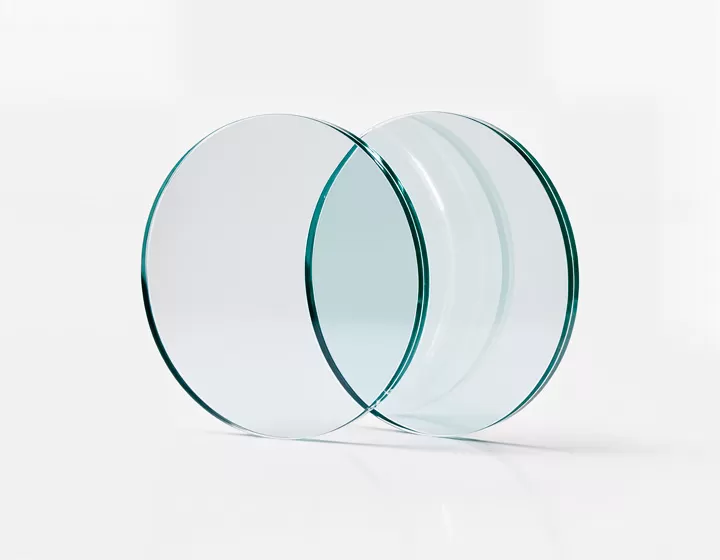
Dichroic filter is an optical filter whose key characteristic is the ability to selectively transmit certain wavelengths of light based on their wavelength (color), while reflecting other wavelengths of light, rather than absorbing them. It is essentially a precision optical coating. Usually, dozens of layers of transparent thin film materials with different refractive indices are alternately deposited on transparent substrates such as glass through techniques such as vacuum evaporation. When light passes through these multi-layered films, reflection and transmission occur at the interface of each layer. By precisely controlling the thickness and refractive index of each layer of film, specific wavelengths of light can produce constructive interference (enhancement) in reflected or transmitted light, while other wavelengths of light can produce destructive interference (attenuation). For the light in the target wavelength band, constructive interference allows it to pass through almost without loss. For light in non target wavelength bands, constructive interference efficiently reflects it out.


ECOPTIK provides customized services, and we can design and produce according to your specific wavelength, size, and angle requirements.


Contact

Features of Dichroic Filter

  • Dichroic filters use the principle of thin film interference and produce the same color as an oil film on the water surface. When light hits the oil film at an angle, some light is reflected from the top surface of the oil and some light is reflected from the bottom surface that is in contact with the water. Since the light reflected from the bottom has a slightly longer travel path, some wavelengths are enhanced by this delay, while others tend to be canceled out, resulting in visible color.

  • In dichroic mirrors or filters, instead of using an oil film to create interference, alternating layers of optical coatings with different refractive indices are built on a glass substrate. Interfaces between layers with different indices of refraction create phase reflections that selectively enhance certain wavelengths of light and interfere with others. These layers are usually added by vacuum deposition. By controlling the thickness and number of layers, the passband of frequencies can be adjusted to the width of the filter and made wider or narrower as needed. Because unwanted wavelengths are reflected rather than absorbed, dichroic filters do not absorb this unwanted energy during operation and therefore do not become more all energy in the passband).

  • Similar dichroic prisms are used where white light is intentionally divided into various color bands (for example, in color video projectors or color TV cameras). However, it is now more common for cameras to have arrays of absorption filters to filter individual pixels on a single CCD array.

Features of Dichroic Filter

Applications of Dichroic Filter

  • In fluorescence microscopy, a dichroic filter acts as a beam splitter, directing illumination at an excitation frequency directly to the sample and then rejecting the same excitation frequency in the analyzer, but passing a specific emission frequency.

  • Some LCD projectors use a dichroic filter instead of a prism to split the white light from the bulb into three colors before passing through three LCD units.

  • Older DLP projectors typically transmit white light sources through a color wheel that uses dichroic filters to rapidly switch colors sent through a (monochromatic) digital micromirror device. Newer projectors may use a laser or LED light source to directly emit the desired wavelength of light.

  • They are used as laser harmonic separators. They separate the various harmonic components of frequency-doubled laser systems through selective spectral reflection and transmission.

  • Dichroic filters are also used to create gobos for high power lighting products. Make photos by overlapping up to four colorful dichroic filters.

  • The color head of a camera enlarger uses a dichroic filter to adjust the color balance in a print.


Key Parameters of Dichroic Filter

Transmittance (T) and Reflectivity (R): The higher, the better, ideally reaching 99%.


Cut off depth: The suppression level of the wavelength band that prevents transmission (or reflection) should be high.


Cut off Sharpness: The steeper the transition from the transmissive region to the reflective region, the better the wavelength selectivity.


Angle of incidence (AOI): The working angle can affect its spectral characteristics, commonly at 45 °.


Damage threshold: In high-power laser applications, a filter that can withstand high power is required.


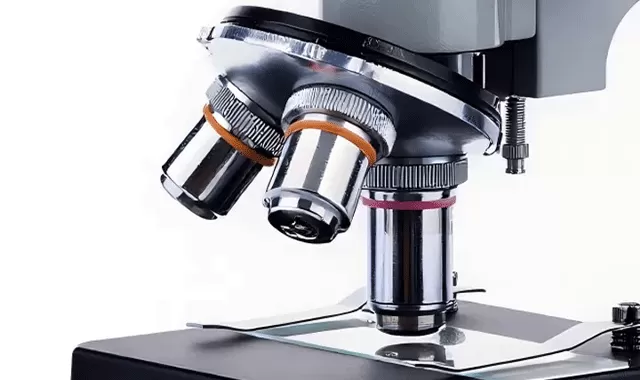
Pushing the Boundaries of Vision: Custom Plan Apochromatic Objectives by ECOPTIK
Top-tier scientific research and demanding industrial applications can't afford compromise. When standard optics fall short, you need a partner capable of engineering vision at the microscopic lev...

30

2025.10

Micro Prism Solutions for Advanced Medical Endoscopy by ECOPTIK
In the delicate world of medical diagnostics, the clarity of a single image can determine a patient's treatment path. As endoscopy becomes more sophisticated, the demand for ultra-precise, miniatu...

30

2025.10

ECOPTIK at Laser World of PHOTONICS 2025
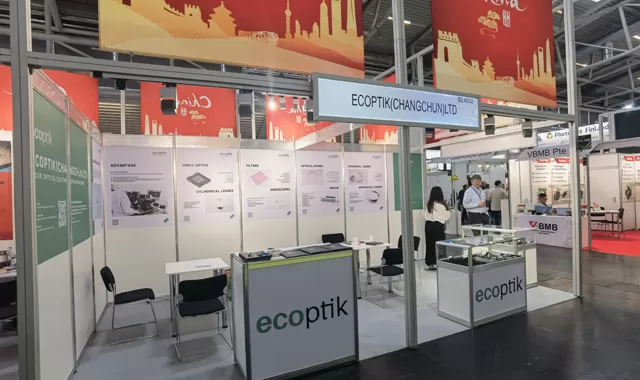
On June 24-27, 2025 local time, the global optoelectronic industry event, the Laser World of PHOTONICS 2025, kicked off at the Messe München. As one of the most influential exhibitions in the industr...

25

2025.06

We use cookies to offer you a better browsing experience, analyze site traffic and personalize content. Part of the tracking is necessary to ensure SEO effectiveness,
By using this site, you agree to our use of cookies. Visit our cookie policy to learn more.
Reject Accept