Micro-optics
Micro Prism Micro Lens Micro Window Rod Lens Micro Lens ArrayOptical Spherical Lens
Plano Concave Lens Plano Convex L Lens Achromatic Cemented Lens Meniscus Lens Double Concave Lens Double Convex Lens Half Ball Lens Custom Hyper Hemisphere LensOptical Dome
Visible Optical Glass Dome Ultraviolet (UV) Dome Infrared (IR) Dome Dome With FlangeOptical Prism
Optical Wedge Window Corner Cube Retroreflector Roof Prism Pyramid Optical Octagon Light Guide Rod Penta Prism Light Guide Prism Dove Prism Cube Beamsplitter Anamorphic Prism Powell Prism 30° - 60° - 90° Littrow Dispersion PrismsCylindrical Mirror
Plano Concave Cylindrical Lens Plano Convex Cylindrical Lens Achromatic Cemented Cylindrical Lens Round Cylinder Meniscus Cylindrical LensFilter
Dichroic Filter Bandpass Filter Longpass Filter Neutral Density Filter Narrow Bandpass Filter Cut Off Filter Mosaic Filter Band Pass Linear Variable Filter Cut-off Linear Variable Filter Pixel Level (Stepped) Hyperspectral FilterOptical Window
Brewster Windows Parallel Windows Witness SamplesCNC Light Weight Component
Silicon Material Silicon Carbide Fused Silica Zerodur MacorAspherical Lens
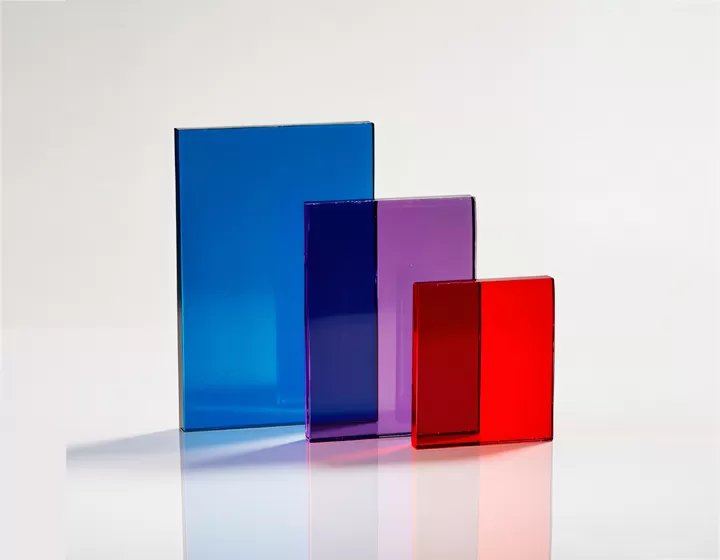
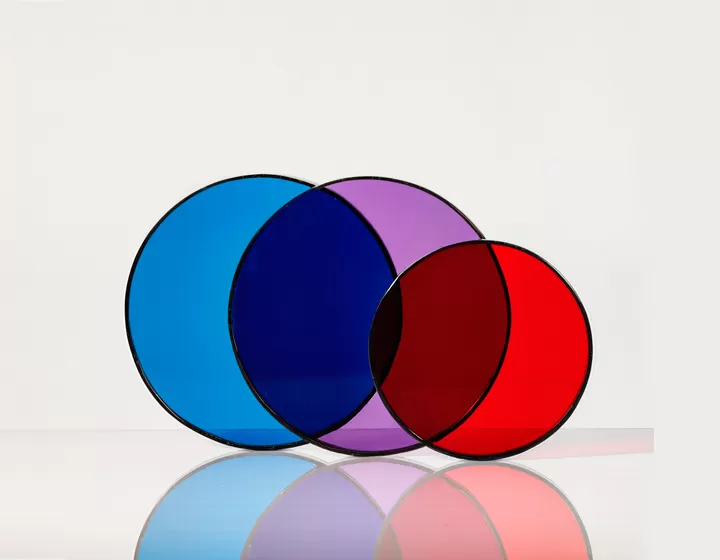
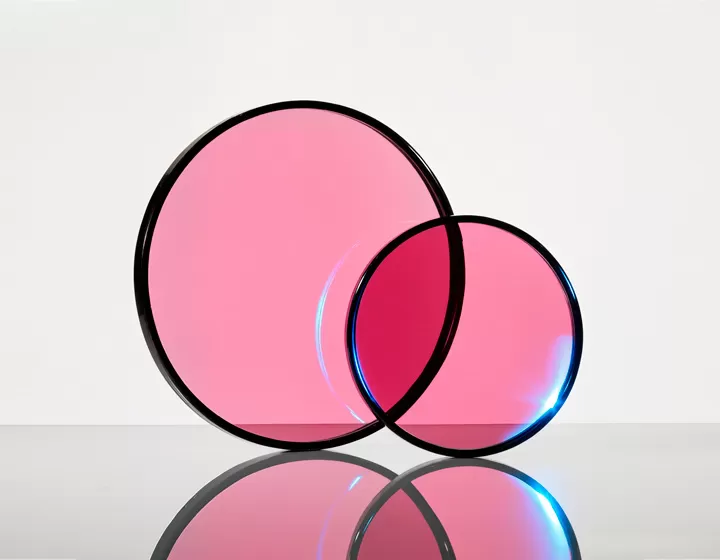
Transmissive Aspherical Lens Reflective Aspherical LensBandpass filter is an extremely widely used optical filter that only allows light within a specific wavelength range to pass through, while strongly blocking (reflecting or absorbing) all light outside of that range.
| TYPE | Working principle | Features |
| Interference type (thin film type) bandpass filter | Based on the interference effect of light. By alternately coating dozens of layers of dielectric films with different refractive indices on a glass substrate, the thickness of each layer of film can be precisely controlled. When light passes through these film layers, specific wavelengths of light are enhanced and pass through due to constructive interference, while other wavelengths of light are reflected or cancelled out due to destructive interference. | Excellent performance: capable of achieving extremely high peak transmittance and very steep cutoff edges. Customizable: ECOPTIK can provide designed with any desired parameters such as center wavelength, bandwidth, OD value, etc. Good thermal stability. The cost is relatively high. |
| Absorption type (colored glass) bandpass filter | Utilizing the absorption characteristics of colored glass with a special formula for specific wavelengths of light. Dyes or ions in glass selectively absorb certain colors of light, allowing only the target wavelength band of light to pass through. | Low cost. Performance is average: the passband shape is irregular, the cutoff steepness is gentle, and the peak transmittance is low. Usually used in combination with interference filters to enhance the blocking effect. |
When making a choice, it is necessary to consider the specific application of the customer comprehensively:
Center wavelength: What is the wavelength of the target light that you need to observe or detect?
Bandwidth: How wide spectral window do you need? Do we need to accurately separate a single wavelength (narrowband) or capture a wider range of colors (broadband)?
Blocking range: What wavelengths of stray light need to be blocked? What is the required level of obstruction (OD value)?
Peak Transmittance: Is there a high requirement for signal brightness? The higher the better.
Incident angle: Will the light beam illuminate the filter at a certain angle? (Note: Increasing the incident angle will cause the center wavelength to shift towards shorter wavelengths).
Surface quality and durability: the surface accuracy, wear resistance, and environmental stability of optical components.
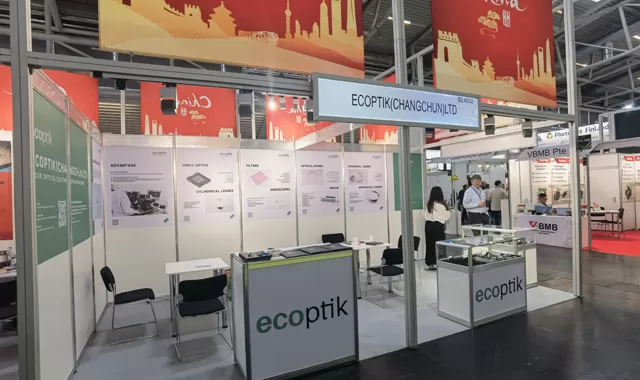
More Place to Find ECOPTIK
30
2025.10
30
2025.10
25
2025.06